About Inshore Dolphins
Australian Snubfin Dolphin, Orcaella heinsohni
- Distribution in Australia in from Port Alma (QLD) north throughout Northern Territory and south to Broome (WA).
- Distribution in Papua New Guinea is the Kikori Delta, Gulf Province.
- The Australian snubfin dolphin is a shy and often evasive inshore dolphin species not known to bow-ride.
- It is a robust dolphin with a rounded head and round paddle-like flippers. A three-tone colouration: dark brown on the top of the body, light brown in the middle and a white belly.
- Maximum length is 2.7m. Maximum weight is 130kg.
- Found in coastal waters up to 20m in depth, as well around river and creek mouths, and occasionally up major river systems (as far as 80m)
- Diet is primarily estuarine fish, cephalopods and shrimp
- IUCN Red List – Near Threatened
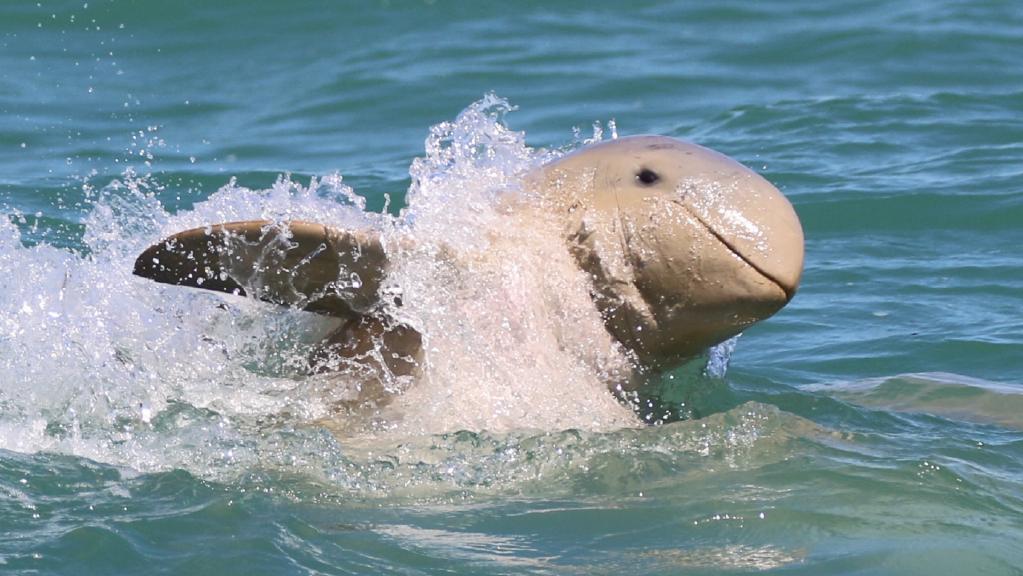
Figure 1. Australian Snubfin Dolphin.
Australian Humpback Dolphin, Sousa sahulensis
- Distribution in Australia in from the QLD/NSW border north throughout Northern Territory and southwestern Shark Bay (WA).
- Distribution in Papua New Guinea is the Kikori Delta, Gulf Province. Australian humpback dolphins also occur along the southern coasts of the Indonesian Provinces of Papua and West Papua, New Guinea.
- The Australian humpback dolphin is often evasive and not known to bow-ride.
- It is a robust dolphin with a long beak and triangular-shaped dorsal fin. Young humpback dolphins are bottlenose dolphin-like in appearance, with medium-length rostrums and uniform slately-grey colouration. As humpback dolphins age, the rostrum becomes longer, and they begin to lose pigmentation, appearing spotted with pinky-like spots and splotches, particularly around the head, dorsal fin and tail stock.
- Maximum length is 2.7m. Maximum weight is 250kg.
- Found in coastal waters up to 20m in depth, as well around river and creek mouths, and occasionally up major river systems (as far as 80m)
- Diet is primarily estuarine fish, cephalopods and shrimp
- IUCN Red List – Near Threatened
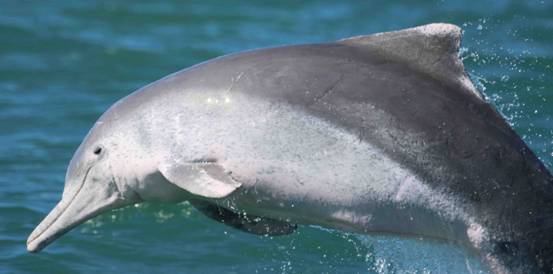
Figure 1. Australian Humpback Dolphin.
Indo-Pacific bottlenose dolphin, Tursiops aduncus
- Distributed throughout Australia in coastal and open waters
- In Papua New Guinea, bottlenose dolphins have not yet been recorded from the Kikori Delta region, only from Daru near the Australian border.
- The Indo-Pacific bottlenose dolphin is an acrobat, confident around boats, and often known to bow-ride.
- It is a relatively slim dolphin with a medium-length beak and high, falcate dorsal fin. Colouration is uniform slatey-blue, often with spotting around the belly.
- Maximum length is 2.6m. Maximum weight is 230kg.
- Found in coastal and open waters up to 40m in depth. In-frequently sighted near creek or river mouths.
- Diet is a wide variety of fish and cephalopods
- IUCN Red List – Data Deficient
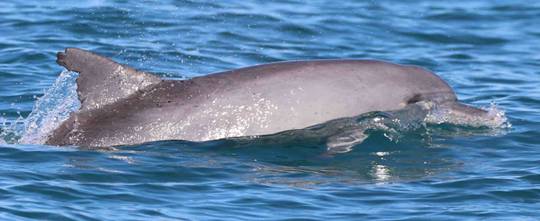
Figure 1. Indo-Pacific bottlenose dolphin.
Conservation and Management
Inshore dolphin conservation and management efforts in Australia are currently directed by the ‘National Research Framework to Conserve the Australian Snubfin Dolphin and Newly Described Australian Humpback Dolphin’.
Relevant links are: Whale and Dolphin Protection Plan http://www.nrm.gov.au/national/local/whale-dolphin-protection
JCU Inshore Dolphin Project (funded by National Landcare Programme) https://fieldcapture.ala.org.au/project/index/86269df2-bb06-4a3e-9790-6f03df5233a3#plan
Co-ordinated Inshore Dolphin Framework - 2013 http://www.marinemammals.gov.au/__data/assets/pdf_file/0018/122670/DSEWPaC_Research_Framework_InshoreDolphins_FINAL.pdf
Methods for Assessment of Conservation Status of Australian Inshore Dolphins http://www.marinemammals.gov.au/__data/assets/pdf_file/0005/142907/Methods-for-Assessment-of-the-Conservation-Status-of-Australian-Inshore-Dolphins.pdf

